

Thumbsucking and Pacifier Habits
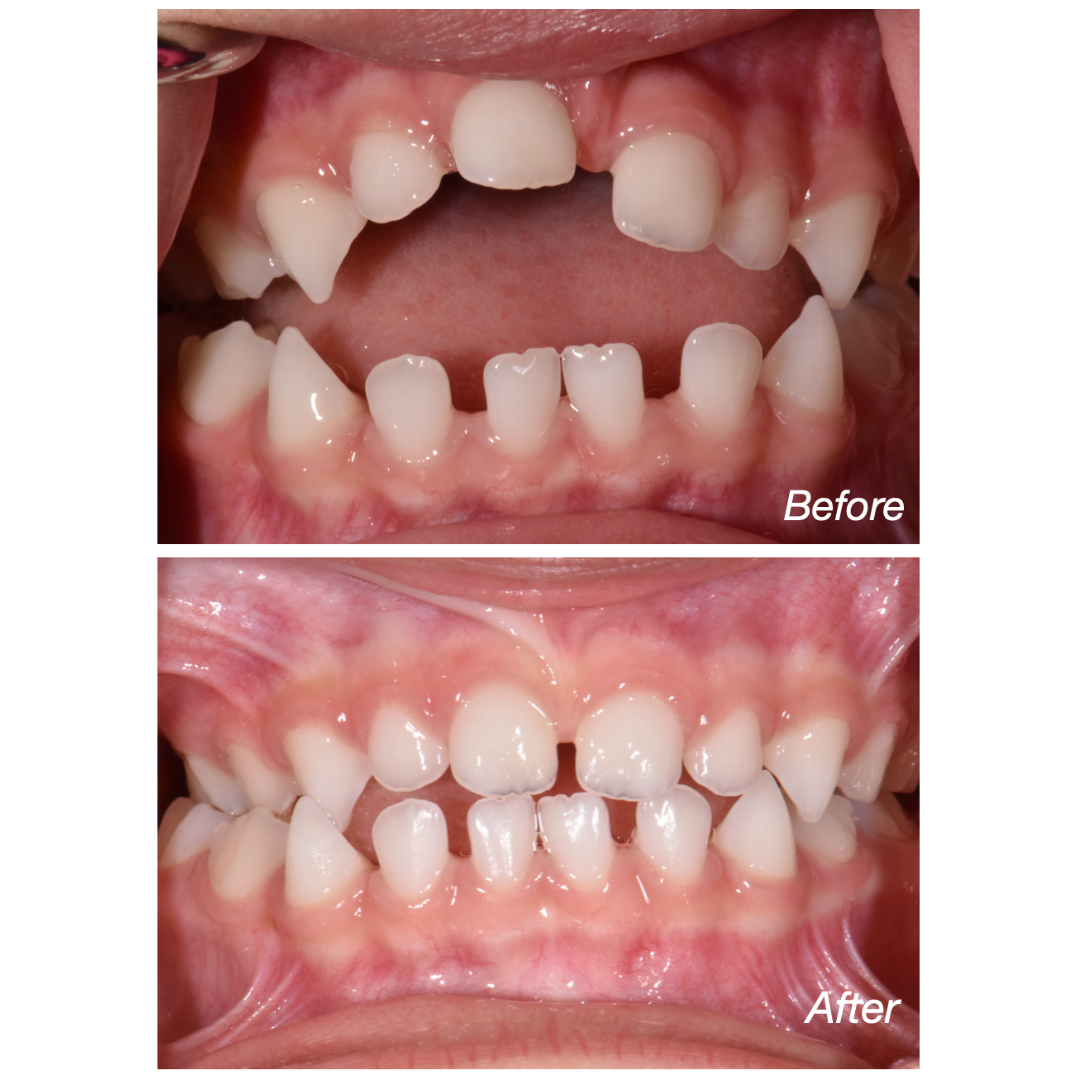
Thumb sucking and pacifier use are very common in young children, and most of the time these habits fade naturally as kids grow. However, when the habit continues beyond the toddler years, it can affect how the teeth and jaws develop. One of the most noticeable changes is an anterior open bite, where the front teeth don’t touch when the child bites down.The good news is that an open bite will often improve on its own once the habit goes away. The young patient shown here had a significant open bite caused by pacifier use, and her teeth self-corrected beautifully after she naturally gave up the habit — no treatment or appliances needed.At North Seattle Pediatric Dentistry, we gently guide families through this stage with positive, age-appropriate strategies. Our goal is to support your child, protect their developing smile, and help prevent long-term changes to their bite.If you have questions about thumb sucking, pacifiers, or your child’s bite, we’re here to help.
Thumbsucking's Impact on Kids Teeth
Thumbsucking is a natural reflex for babies, but prolonged habits can affect dental development. It may cause misalignment of baby teeth, open bite, or changes in the top of the mouth. If it continues beyond age 4, it can impact how permanent teeth grow and may lead to speech issues. Early guidance from a pediatric dentist can help prevent long-term effects.
What Symptoms Should I Watch for Thumbsucking?
Here are key symptoms to watch for if your child sucks their thumb:
Changes in Tooth Alignment
Front teeth may push outward or not meet correctly.
Open Bite
A visible gap between the upper and lower front teeth when the mouth is closed.
Speech Difficulties
Trouble pronouncing sounds like "s" or "th."
Callused or Red Thumb
Skin irritation from frequent sucking.
Changes in Palate Shape
Narrowing or high-arched roof of the mouth.
Prolonged Habit Beyond Age 4
Increases the risk of long-term dental effects.


Use of Pacifiers
Pacifiers can help soothe infants, satisfy their natural sucking reflex, and may reduce the risk of SIDS during sleep. They're often easier to wean than thumb-sucking. However, prolonged use beyond age 2–3 can lead to dental issues like misaligned teeth. To prevent problems, keep pacifiers clean, avoid dipping them in sweet substances, and monitor usage as your child grows.
Extended use can contribute to anterior open bite, posterior crossbite, and palatal narrowing. However, pacifiers are associated with reduced SIDS risk when used during sleep in the first year.
Contact us to schedule a consultation or dental exam for kids. Your pediatric dentist can offer further help. Remember, quitting a habit requires time, patience, and support!
How Can I Stop My Child's Thumbsucking?

- Raise and reward your child for not thumb-sucking to encourage positive behavior changes.
- Identify when and why your child sucks their thumb to address emotional or situational triggers.
- Gently remind your child to stop thumb-sucking without scolding or creating stress.
- Offer a soft toy or blanket as a comforting alternative to thumb-sucking.
- Use a reward chart with stickers or stars to motivate consistent thumb-free days.
- Place a thumb guard or bandage on the thumb, especially at night, to discourage the habit.
- Visit a pediatric dentist for guidance and possible treatment if the habit persists.
Whatever approach you use, your child needs your support and understanding to stop thumb-sucking.
Our Location
10202 5th Ave NE #101, Seattle, WA 98125
northseattledds@gmail.com
(206) 915-5090
(206) 915-5090